
REJECTION!
It's the Name of the Game

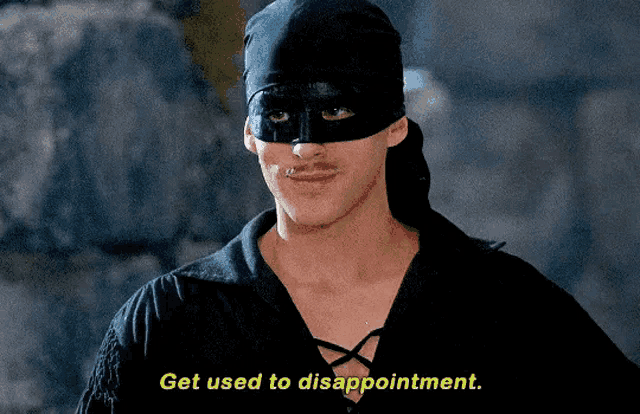
Most writers are no stranger to that most hallowed rite of literary passage: the rejection. Back in the early 2010s, when I was querying agents, I amassed hundreds upon hundreds of emails that still sit in the dusty corners of my inbox. It was actually kind of fun revisiting them this week! Some are short and concise. Others are longer and more eloquent. Many are so nice. One agent sent me an actual edit letter — such a kindness, considering how busy I know they all are. Here is a small sample of the “No, thank you” emails I dug from the archives:
Unfortunately, I am not able to offer you representation at this time. That said, you certainly may have already secured an advocate and if so I look forward to seeing your name on the shelves!
Thank you for thinking of me. I've had a chance to take a look and I'm afraid I've ultimately decided to pass on this one.
I’m a huge fan of you and your writing. But if I’m honest, while I love your voice and think you’re an incredible talent, I’m not sure the story itself is speaking to me quite as strongly as it might.
I admit to feeling very torn here. The voice is great and I felt like it moved seamlessly and fluidly, but ultimately, I have to pass. I couldn't quite get invested in this, as much as I love the writing.
I don't feel I'm quite connecting, and so I'm stepping back. But I wish all the best for you and your career.
I’m sorry to say I don’t think I’m 100% won over, which I’d need to be in order to make an offer of my own. I’ll respectfully bow out, but you are someone whose name I very much look forward to seeing on the shelves.
So many of them are lovely and encouraging! And though I received many more formulaic ones — to be expected from people who are so busy — I never once got anything earth-shattering or melodramatic like “You are a total hack” or “Asian stories don’t sell.” Mine are mostly along the lines of: “You are good! You are so close! But you are not there. How do you get there? We have no idea either! Good luck!”
Eventually, I got used to hearing “No.” I understood early on that the way I mentally respond to rejection defines my chance of success. It taught me two lessons that I’ve carried into my now decade-long career:
I put everything I’ve got into my work. Every book I send into the world is of the highest quality I can give at that specific point in time. I write a solid draft, I dedicate myself to revisions, and I polish it to within an inch of its life so that when it leaves me, I know it’s the best I can possibly produce. That makes rejections easier to stomach because there’s literally nothing more I feel I could have done. If someone doesn’t like it, then it’s a matter of opinion — not quality.
I get to decide how I deal with rejection. My reaction is my responsibility. I can cry. I can let it sting. I can vent to friends I trust. But will I let one person’s “No” stop me, or will I let it drive me? I have faith in my own talent. I have faith in my work ethic. I have faith in knowing there are people out there who will love my work, so I’ll keep writing until it finds them. I have a Taurus moon and I am an ox on the lunar zodiac. There is livestock all over my birth chart, which makes me stubborn AF! No one can stop me from writing except me.
See, rejection is something everyone goes in feeling terrified about and then it simply becomes part of the job. Because guess what? The rejection never ends!
You query, and you get rejected by agents. You take your book on submission, and you get rejected by editors. Your book releases, and you get rejected by readers.
Last year, I got invited to audition to write a really cool-sounding book series. It was right up my alley. My sample pages were tight. I felt like I had a good grasp on the characters. But I haven’t announced that splashy multi-book deal because — you guessed it — I got rejected!
Rejection is a fact of life. It will hurt like hell. But you will survive! And you will learn, with time, that it often has less to do with the quality of your work and more to do with that dreaded beast we all face as artists: subjectivity.
Look at Goodreads! It is the land of rejections galore, proof positive that “No” is still the most common word to hear as an author even after you achieve your publishing dream. But I never let a low rating stop me from reading and enjoying a book. There are so many reasons why someone might reject a book, and that is their right. But it’s also my right to think for myself, and decide for myself.
Listen, I’ve been here for a while. I have seen things! Don’t let this youthful, moisturized face fool you. I am a proud publishing crone. Do not cite the deep magic to me, I was there when it was written, etc. etc. I have gotten low Goodreads ratings for simply daring to exist, so I know better than to let someone else’s “No” dictate my mindset, whether it’s about art I’ve made or am consuming.
Without further ado, here is a list of reasons — outside of a book’s quality and worth — why somebody might decide a story isn’t for them and reject it:
1. The book wasn’t what they wanted or expected.
The other day, I got tagged in a bad review for NOW COMES THE MIST from someone who came in expecting a ghost story and was very disappointed to find out that it was a Dracula retelling. I’m not sure what made them think it was a ghost story, but this is the sort of thing you can’t control — what a reader comes in anticipating you will deliver, even when every piece of marketing (including the synopsis) points elsewhere. You can write a young adult novel and there will be a reviewer saying, “I hate young adult novels. One star.”
I saw a negative review yesterday for a book whose main character has a certain medical condition, which angered the reader because they had the same condition and wanted to escape into fiction and couldn’t.
Rejecting a book can be very personal, and like I said, it’s the reader’s right to do so. You the author just can’t let it get you down.
2. They are jealous that the book got published.
Let me tell you a little story about FOREST OF A THOUSAND LANTERNS and how, when it was first announced in 2016, there wasn’t much Asian fantasy out there and that triggered one young author — now published with their own successful Asian fantasies, thanks, in no small part, to the existence of my debut as well as so many others — who led a targeted campaign to destroy me when my book wasn’t even out yet.
